Why Your Appetite, Not Just Calories, Might Be the Key to Weight Management

Countless Americans have tried every diet imaginable, yet long-term success remains elusive. New insights suggest the conversation needs to shift from counting calories to understanding the body's own appetite signals.
In today's world, the pressure to manage our weight is everywhere. We're flooded with images of ideal bodies, celebrity diet plans, and "miracle" workout routines. For millions of adults, this creates a frustrating cycle: restrictive dieting, temporary results, and the inevitable rebound, often accompanied by feelings of guilt and failure.
Many of us have been led to believe it's a simple equation of "calories in, calories out." We've been told that if we just had more willpower, more discipline, we could achieve our goals. But what if that's not the whole story? What if the constant battle with hunger isn't a personal failing, but a complex biological response? An increasing number of experts believe the key isn't in fighting our bodies, but in understanding them.
The Science of Satiety
To understand this, we need to look beyond the food on our plate and into the intricate hormonal symphony that governs our hunger and fullness. Our appetite isn't just a matter of an empty stomach; it's a conversation between our digestive system and our brain.
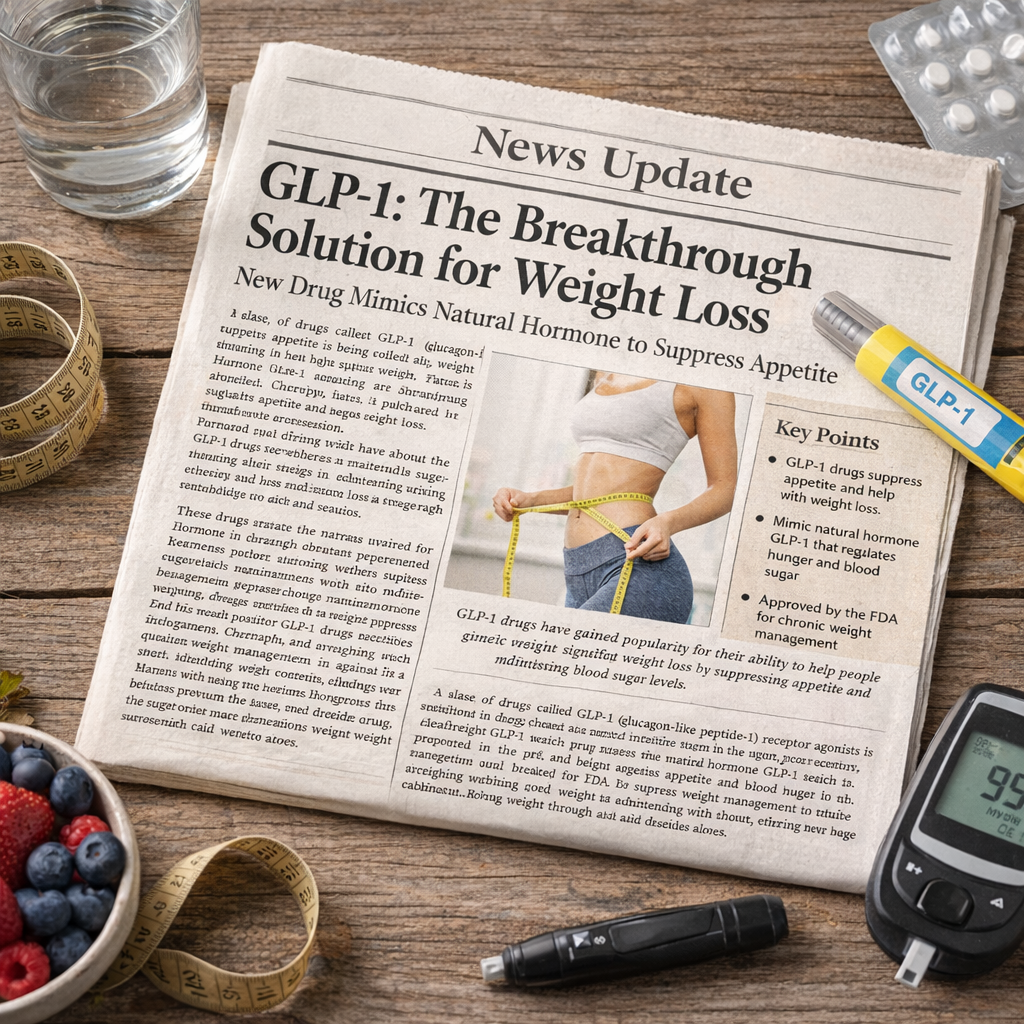
Key players in this conversation are hormones. You may have heard of ghrelin, the "hunger hormone," which signals the brain that it's time to eat. Its counterpart is leptin, which signals satiety, or fullness. However, a crucial but less-discussed player is a group of hormones called incretins, including one known as GLP-1 (glucagon-like peptide-1).
In essence, GLP-1 is one of the body’s primary natural appetite regulators. When this system works efficiently, we eat when we're hungry and stop when we're full. But for many, this delicate balance can be disrupted, leading to persistent cravings and difficulty recognizing fullness cues.
When we eat, our gut naturally releases GLP-1. This hormone does several important things:
- It tells the pancreas to release insulin, helping to manage blood sugar.
- It slows down how quickly the stomach empties, making us feel full for longer.
- Crucially, it communicates with the appetite centers in the brain, reducing food cravings and enhancing the feeling of satiety.
So what are you supposed to do? Just accept the frustrating cycle of dieting and fighting cravings forever?
A growing number of savvy Americans are saying "no". They've found a different path.
Sarah's Journey: A Familiar Story
Sarah, a 48-year-old project manager from Austin, felt like she had tried everything. For two decades, her life was a series of diets. Low-carb, low-fat, keto, intermittent fasting—you name it, she'd done it. Each time, she would lose some weight, fueled by sheer determination. But the hunger was always there, a constant, nagging presence.
"I felt like I was at war with my own body," she recalls. "I'd be in a meeting, and all I could think about was the snacks in the breakroom. I'd go to bed hungry. I blamed myself, thinking I just wasn't strong enough."
The breaking point came after a particularly restrictive diet left her feeling exhausted and defeated. The weight she had fought so hard to lose returned, bringing with it a sense of hopelessness. A friend, noticing her frustration, mentioned a podcast about the biology of appetite. Skeptical but desperate, Sarah listened.
"For the first time, I heard someone explaining that my constant hunger wasn't a lack of willpower," she says. "It was about hormones and brain signals. It was a revelation. I realized I had been trying to solve a complex biological problem with simple math, and it was never going to work long-term."
The GLP-1 Revolution: More Than Just Weight Loss
The focus on GLP-1 isn't just a fleeting trend; it's a paradigm shift in understanding metabolic health. For years, the conversation was dominated by "calories in, calories out," a model that frustrated millions by ignoring the complex hormonal symphony that governs hunger, fat storage, and energy.
GLP-1 agonists, the class of drugs that includes Ozempic, have been shown to do more than just suppress appetite. Clinical studies have linked them to improved cardiovascular outcomes and better glycemic control, which is critical for the 1 in 3 American adults who have prediabetes[1]. This highlights a crucial point: effective weight management is intrinsically linked to overall metabolic health.
The challenge, however, remains accessibility. The very solutions that prove the power of this hormonal approach are priced out of reach. This is the gap that natural GLP-1 enhancement aims to fill—providing a way to support the body's own metabolic systems.

A Modern Approach: Medically-Guided Support Online
Sarah’s journey led her to explore modern healthcare solutions that leverage technology to provide personalized support. The emergence of telehealth has made it possible to connect with medical professionals from the privacy and convenience of home. This modern approach typically involves a few key steps:
- Confidential Online Evaluation: It starts with a comprehensive online assessment about your health history, lifestyle, and past experiences. This information is kept secure and confidential.
- Review by a Licensed Professional: Your assessment is reviewed by a U.S.-licensed healthcare provider to evaluate your individual situation and determine if a medically-guided program is appropriate.
- Personalized Guidance: If eligible, the focus shifts to a holistic plan that may include guidance on nutrition, activity, and lifestyle changes, tailored to work with your body's biology.
- Ongoing Support & Potential Delivery: Many programs offer ongoing support and check-ins. For those prescribed medication, some services offer the convenience of discreet delivery.
Who Might This Approach Be Suitable For?
A medically-supported approach isn't a one-size-fits-all solution, but it may be beneficial for individuals who:
- Have consistently struggled with diet and exercise alone.
- Experience persistent feelings of hunger and cravings.
- Feel frustrated by the cycle of losing and regaining weight.
- Are looking for a science-based, comprehensive plan.
It is generally not intended for individuals with a history of certain medical conditions, those who are pregnant or breastfeeding, or those looking for a quick fix. The final decision always rests with a licensed healthcare professional.[2]
Learn More and See if You Qualify
If you've been on the diet rollercoaster for years, it might be time for a different approach. A secure, confidential online evaluation is the first step.
More and More Americans Already Feel The Difference
The results speak for themselves. GLP-1 is developing a loyal following of customers who call it "the only thing that has ever worked."
Over the past few years, conversations around weight management in the United States have quietly shifted.
Instead of focusing solely on restrictive diets or extreme workout routines, many adults are beginning to ask a different question: why does appetite feel so hard to control in the first place?
This change in mindset has driven growing interest in medically guided approaches that focus on how the body regulates hunger and fullness — including GLP-1–based therapies.
Health experts have long discussed the role of hormones in appetite signaling. GLP-1, in particular, plays a role in helping the body recognize satiety after eating. As awareness increases, many Americans are beginning to understand why willpower alone often isn’t enough — and why biological factors matter.
As a result, online searches, medical discussions, and patient inquiries related to GLP-1 options have increased steadily in recent years. Adults who once felt stuck in cycles of dieting and regain are now seeking professional guidance that looks beyond calories and addresses appetite regulation more holistically.
- People are asking more informed questions about how appetite works
- Patients are seeking licensed medical input rather than quick fixes
- Interest in personalized, doctor-reviewed approaches continues to grow
- Convenience and privacy of online evaluations are becoming key factors
Many individuals who explore GLP-1–based approaches describe subtle but meaningful changes — such as feeling satisfied sooner, thinking less about food throughout the day, or experiencing a greater sense of control around eating habits. Individual experiences may vary and depend on medical eligibility and professional guidance.
This growing interest reflects a broader realization: sustainable weight management often starts with understanding the body, not fighting against it.
GLP-1–based treatments are not appropriate for everyone and require evaluation by a licensed healthcare professional. This content is for informational purposes only and does not constitute medical advice.
References:
[1] Centers for Disease Control and Prevention. (2023). The Surprising Truth About Prediabetes. cdc.gov
[2] Grodstein, F., et al. (1996). Three-year follow-up of participants in a commercial weight loss program. Archives of Internal Medicine. pubmed.ncbi.nlm.nih.gov